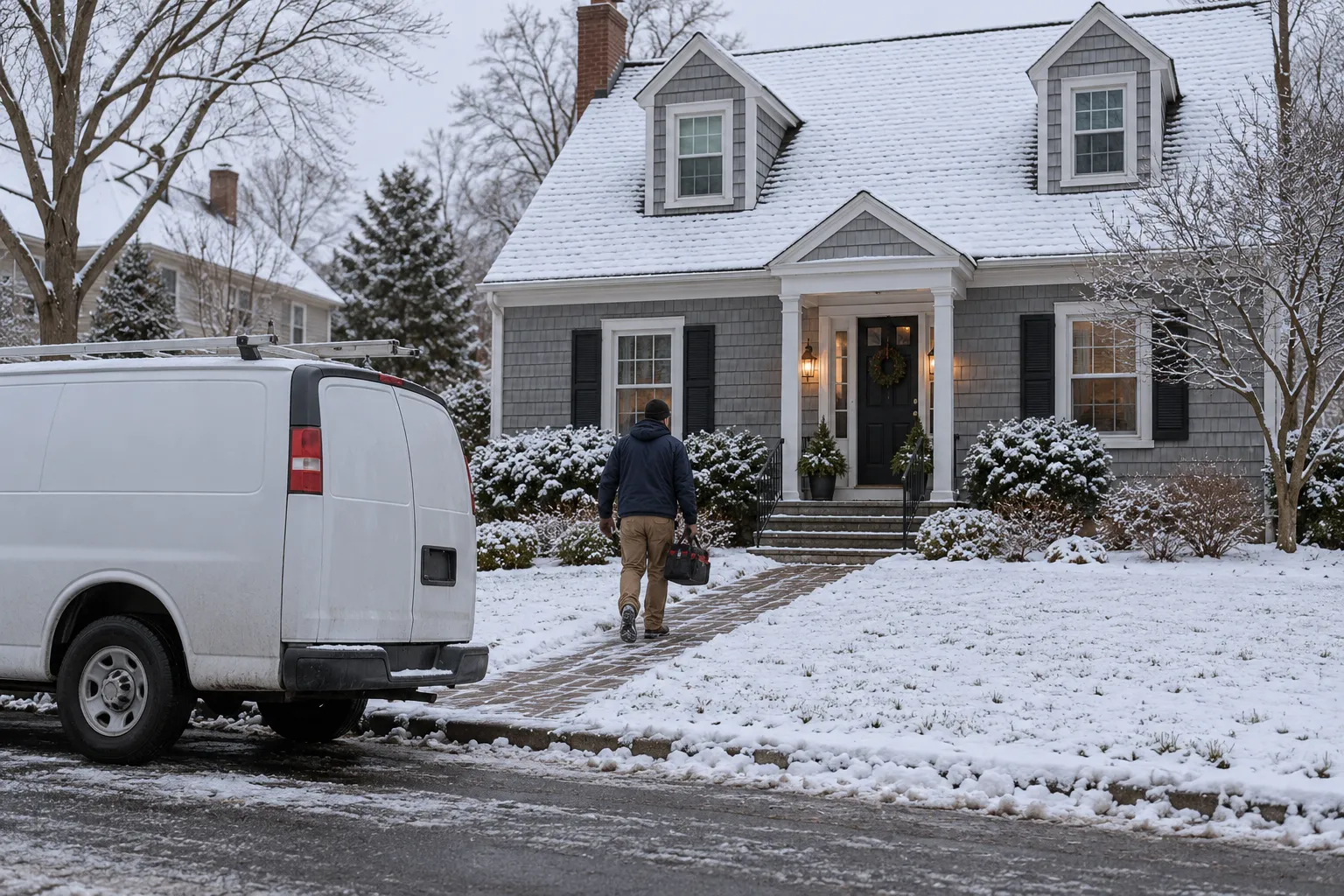
Need emergency plumbing help in Peapack and Gladstone?
Tell us what is going on and where. We will point you to independent local providers, or you can request an estimate and wait for a reply.
No obligationA plumbing emergency feels huge in the moment. A pipe splits, a toilet floods, or water creeps across the basement floor. You want a real person who knows what to do. That is what this page helps you find.
Comicbishop Plumbing is a referral service. We do not send trucks or do the repair. We connect you with independent plumbing providers in the Peapack and Gladstone area. Providers do the work, set their own prices, and decide when they can arrive. You will find simple steps for the first few minutes, plus questions to ask before you agree to anything. You will also find notes on what counts as a true emergency, what a visit usually looks like, and how to spot warning signs. Read at your own pace, and use what helps.
Take a breath. You can handle the next few minutes. Water is messy, but most leaks can be slowed down with a few simple moves.
First, find your main water shutoff. In many older homes it sits in the basement near the front wall, close to the meter. Turn it clockwise until it stops.
Here is a short list to work through, in order:
If you smell gas or see water near outlets, leave the area and contact your utility or emergency services first. Plumbing can wait. Safety cannot.
Not every drip needs a rush visit. A true emergency is water you cannot stop, or water that is damaging your home right now.
A slow drip under a sink can usually wait for a regular visit. Ask the provider what they think when you reach one. A good one will tell you honestly if it can wait.
Water spreads farther than you think. It soaks into drywall, wicks up studs and settles under flooring. In a full basement, it can reach stored items in minutes.
Damp materials can start growing mold within a couple of days. That is why shutting off the water first, then asking for help, makes sense. Many providers can respond quickly, though availability varies.
Cold snowy winters are hard on older homes. Pipes along stone or block foundation walls, in crawl spaces and in unheated corners freeze first. When ice expands, the pipe can split. You may not see the damage until the ice melts.
If a pipe is frozen but not burst, open the faucet a little. Warm the area with a hair dryer on low. Never use a flame. If you see a crack or bulge, shut off the water and get help.
Freeze-thaw cycles and spring snowmelt push groundwater against foundations. Storm surges and heavy rain can overload sewer lines too. If water backs up from a floor drain, stop using sinks and toilets. More water in the system makes it worse.
A tank that leaks from the bottom has usually failed inside. Turn off the cold water feed to the tank. Shut off the power or gas supply at the unit. Do not touch hot water pooled on the floor.
A pressure relief valve that keeps dripping or hissing also needs a pro. Leave it alone and ask a provider about it.
Providers in our network usually start by finding the source. They stop the leak, then talk with you about the repair. Some fixes are temporary until parts arrive. Others finish the job on the spot.
A good provider explains the options in plain words. You choose what happens next.
Comicbishop Plumbing is not a plumbing company. We pass your request to independent providers who serve your area. They are separate businesses. They quote their own prices, hold their own licenses where required, and do the work themselves.
Request a callback to check provider availability. Hours vary by provider, so we never promise a set time.
Ask before you agree. A calm set of questions protects you.
A good answer is clear and specific. A red flag is pressure to sign right away, cash-only demands, or a price that changes with no explanation.
Be careful if someone shows up unasked after a storm. Be careful if the quote is only verbal. Be careful if they refuse to name their business. You can always say you need a minute.
Once the water is stopped, dry things out fast. Run fans and a dehumidifier. Keep your photos and the provider's invoice.
Some policies may cover sudden damage, so check your policy. Providers can often help document damage for a claim. Ask for an itemized invoice and notes on what was fixed.
Split or cracked supply lines in walls, ceilings and basements, including pipes that froze and then let go when the ice thawed.
Waste water rising in tubs, floor drains or toilets, which needs careful handling and proper cleanup.
Leaking tanks, failed valves and supply line trouble.
No water, very low pressure, or a leak between the street and your home.
Prices vary a lot by home, pipe type and how hard the repair is to reach. These are typical U.S. ranges only. Ask for a written quote before work begins, and ask what is included.
| Item | Typical range | Notes |
|---|---|---|
| Emergency service call | $100 – $400 | Often applied as a trip fee; ask what it covers |
| Burst pipe repair | $150 – $1,000 | Depends on pipe material and access |
| Frozen pipe thaw and repair | $200 – $1,500 | Higher if walls must be opened |
| Water heater repair | $150 – $800 | Valves and elements cost less than tanks |
| Water heater replacement | $1,200 – $3,500 | Varies by size, fuel type and fittings |
| Shutoff valve replacement | $150 – $600 | Older main valves may need extra work |
Shut off the main valve and keep everyone away from wet electrical areas.
Request a callback to check which providers can respond to your area.
Ask your questions, get a written quote and choose what feels right.
The provider fixes the problem. Keep photos and invoices for your records.
You always know who we are: a referral service that connects you with providers, not a plumbing company.
Independent providers serve homes like yours, including older houses with stone and block foundations.
You get a simple list to ask before you agree, so you can spot a good answer.
You decide what happens next. Request an estimate and take your time.
Tell us what is going on and where. We will point you to independent local providers, or you can request an estimate and wait for a reply.
No obligationShut off the main water valve right away, usually near the meter. Then open a faucet on the bottom level of the house to drain the lines, move items out of the water's path and take photos. After that, ask a local provider for help.
Hours vary by provider, and no one can promise a set time. Request a callback to check which providers in our network can respond to your area right now.
Some policies may cover sudden damage, but not slow leaks or wear. Check your policy and call your insurer. Providers can often help document damage for a claim.
Tell us what is going on and where. We will point you to independent local providers, or you can request an estimate and wait for a reply.
No obligation