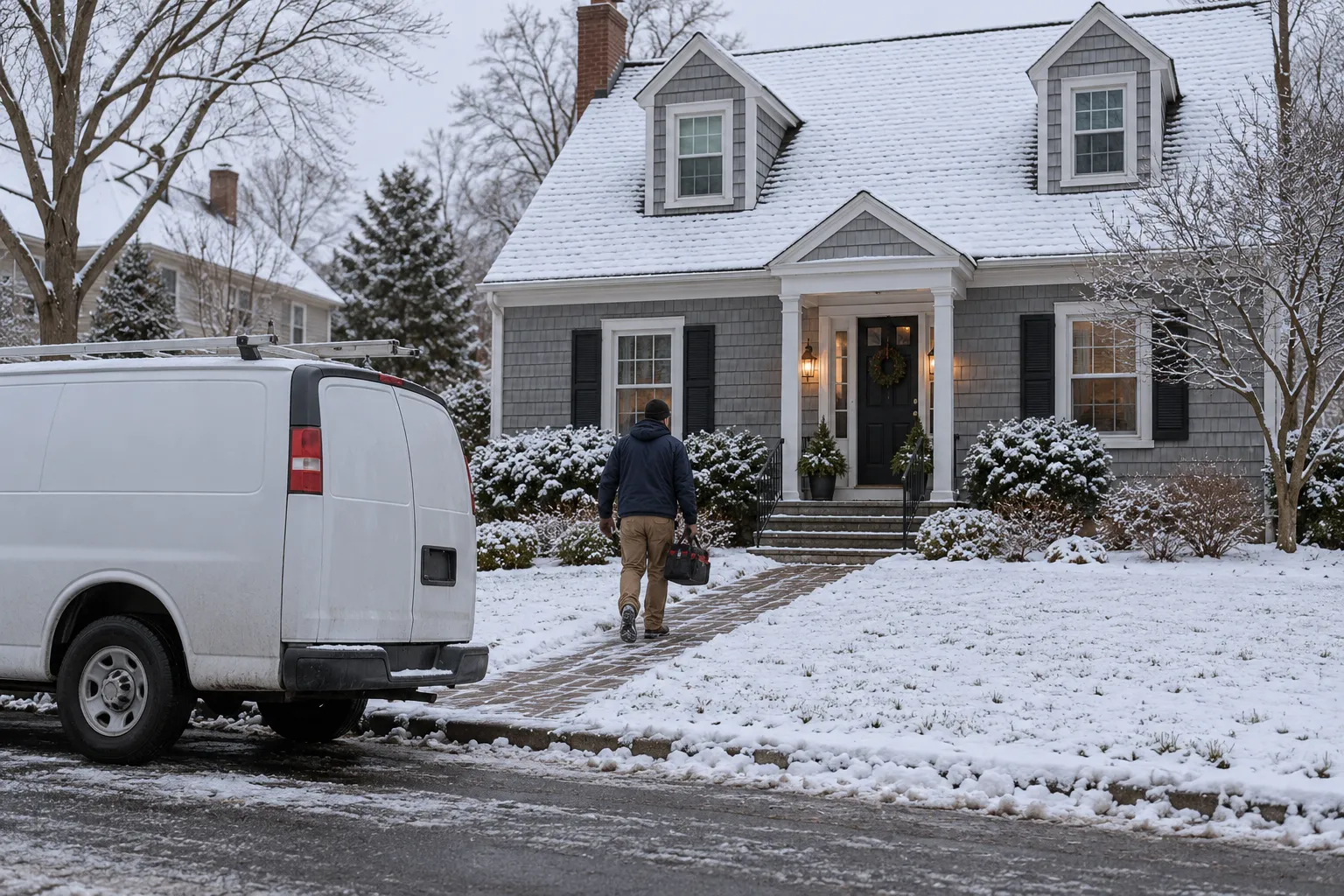
Need sewer line repair in Peapack and Gladstone?
Tell us what is going on and where. We will point you to independent local providers, or you can request an estimate and wait for a reply.
No obligationA sewer line carries everything that leaves your home, from the kitchen sink to the toilets. When it cracks, clogs or collapses, the waste has nowhere to go. You may see backups in the basement, gurgling drains or soggy patches in the yard.
Comicbishop Plumbing is a referral service. It does not do the work. It connects you with independent local providers in our network who handle sewer line repair around the Peapack and Gladstone area. This page explains what to do first, how problems are found, what repairs look like and what to ask before you agree to anything. It also covers common causes, typical warning signs, permits and red flags to watch for. Providers do the work, and you make the final call. Read it through once, then keep it handy when you talk with a provider.
Sewage in a floor drain, tub or toilet is upsetting. Many homeowners have been where you are. Take a breath. A few calm steps in the next few minutes will protect your home and your family.
Keep children and pets away from the wet area. Sewage can carry germs, so avoid touching it with bare hands. If water is near outlets, appliances or a panel, stay out and do not flip switches while standing in water. If you smell gas, leave the house and contact your utility or emergency services.
Pause the washer, dishwasher, showers and toilet flushing. Every gallon you add has to go somewhere, and it will usually find the easiest way out, which is the opening closest to the floor. In a full basement, that is often a floor drain.
Comicbishop Plumbing is a referral service. It does not send trucks and it does not repair pipes. You are connected with independent local providers in our network. Providers do the work, set their own prices and decide their own schedules.
Request a callback to check provider availability.
Not every problem starts with a flood. Often the clues show up slowly, and they are easy to miss.
One slow sink is usually a small clog. Many symptoms at once point toward the main line.
Most sewer problems have an ordinary cause. Knowing it helps you ask better questions.
Tree roots look for water and slip into tiny joints. Older homes may have clay, cast iron or fiber pipe that has cracked, rusted or come apart over decades. Grease, wipes and heavy buildup add to the trouble.
Cold winters, frost and spring snowmelt make soil heave and settle. That motion can pull pipe joints apart or bend a line. Older stone and block foundations can also shift over time and put stress on the pipe where it leaves the house.
A good provider should not guess. Many use a small waterproof camera on a flexible cable to look inside the pipe. They can see cracks, roots, sags and breaks, and often record the video for you to view.
Some also use a locator to mark the pipe's depth and path on the ground. That helps you understand how much digging a repair may need. Ask to see the footage before you decide.
The right fix depends on what the camera shows. Not every sewer problem needs a trench across the yard.
If roots or buildup are the only issue, the line may be cleared and checked again. A cleanout, which is a capped access point, can make future checks simpler.
If one short section is broken, a provider may dig down and replace just that piece.
Trenchless methods can repair or replace a line with less digging. They do not suit every pipe, so ask why a method fits yours.
When the line is badly collapsed or sagging, open-trench replacement may be the sound choice.
Many towns require a permit for sewer work, and some require an inspection afterward. Ask the provider who handles that paperwork.
Also ask where your responsibility ends. In many areas you own the pipe from the house to the property line, and sometimes out to the main. Your town or utility can tell you where the line is.
Request a callback to talk through your situation with a provider.
Ask before you agree. A steady provider will not mind these questions.
Good answers are specific. You should hear the location of the damage, why one method was picked and what could change the price. A provider who says "I am not sure until we dig" is being honest.
Some policies may cover sudden damage, but many exclude wear and root damage. Check your policy, and know that providers can often help document damage for a claim.
A camera runs through the pipe so you can see cracks, roots or sags before work begins.
A short broken section can be dug out and replaced without touching the whole line.
Lining or pipe bursting may fix some lines with far less digging across your yard.
A collapsed or badly sagging line may need a new pipe from the house outward.
Sewer prices swing widely because depth, pipe length, soil and access all matter. These are typical U.S. ranges, not quotes. Always ask for a written estimate that lists exactly what is included.
| Item | Typical range | Notes |
|---|---|---|
| Camera inspection | $100 – $500 | Often includes a recording of the pipe |
| Cleanout installation | $500 – $2,500 | Depends on depth and floor or yard cutting |
| Spot repair (dig) | $1,000 – $4,000 | Price rises with depth and surface restoration |
| Trenchless lining | $3,000 – $10,000 | Needs a pipe that is not fully collapsed |
| Pipe bursting | $3,000 – $12,000 | Replaces the line with less digging |
| Open-trench replacement | $3,000 – $25,000 | Long runs and deep pipes cost more |
Stop using water, keep people away from sewage and shut off power only if you can do it safely.
Request a callback or send a request so a local provider can be matched.
Get camera footage, a written scope and a clear price before work starts.
The independent provider repairs the line, handles permits and walks you through it.
You know who we are and who does the work before you ever speak to anyone.
Providers in our network set their own prices and schedules, so you can compare and choose.
We share what to ask and what to watch for, so you can hire with a steady head.
Requesting an estimate carries no obligation, and you decide whether to move forward.
Tell us what is going on and where. We will point you to independent local providers, or you can request an estimate and wait for a reply.
No obligationA single slow drain is usually a small clog. If several drains back up, gurgle or smell at once, the main sewer line may be the cause. A camera inspection can show you for certain.
Sometimes. Trenchless methods like lining or pipe bursting need little digging, but they only suit certain pipes. A camera inspection helps a provider tell you whether your line qualifies or needs an open trench.
Some policies may cover sudden damage, but many exclude wear, age and root damage. Check your policy and ask your insurer. Providers can often help document the damage for a claim.
Tell us what is going on and where. We will point you to independent local providers, or you can request an estimate and wait for a reply.
No obligation